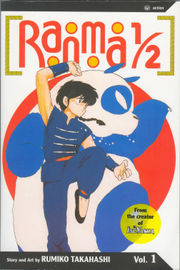
 For a long time I’ve been an avid reader of Rumiko Takahashi’s “Inuyasha.” I originally was reading it in Japanese, but there was just a bit too much that I had to “bleep” over; since it mostly takes place in 16th century Japan, the old language threw me off. So I’ve been reading Viz’s English version in trade paperback form. But until now I hadn’t read any of Takahashi’s older stuff.
For reading during my vacation I picked up the first book of her “Ranma 1/2” (and also the “Evangelion” I reviewed earlier). Ranma, which ran in Japan (in Shonen Sunday) from 1987 to 1996, focuses on the relationship between the titular boy character and Akane. Their fathers have decided that the two teenagers should be married, but neither particularly likes the other.
The twist is that Ranma, during martial arts training in China, fell into a pool which was cursed after a young girl drowned in it. When Ranma is hit with cold water, he becomes a girl; hot water changes him back to a boy.
Obviously, he gets hit with cold water at all kinds of inopportune times. Some writers would play this predictably for “Three’s Company”-style “misunderstanding” yawner plotlines, but Takahashi does more interesting things with the device.
While there is some sexual titillation to this, including some exposed breasts, the main point of the series seems to be exploring gender roles and expectations. While Ranma physically becomes a girl, Akane has sometimes been chided for acting too much like a boy. At the same time, she’s jealous that female-form Ranma has a bigger bustline than she does.
I laughed out loud a number of times at the first volume. This is more of a comedy than the tense adventures of Inuyasha. While I still enjoy Inuyasha, I’m definitely going to be picking up more Ranma!
 Is writing funny female characters a bigger challenge than making male characters funny? Or is it all a matter of approach? Paige Braddock (Jane’s World) and Hilary Price (Rhymes with Orange) join Tim to discuss a topic we picked up from Webcomics Weekly episode 35!
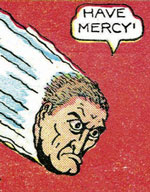 Fletcher Hanks created some bizarre, sadistic superhero comics in 1939-1941. Tim and Kumar discuss this collection of his work, edited by Paul Karasik.
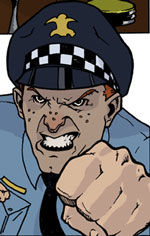 Chicago artist Jenny Frison talks about her Web comic (with Len Kody) “
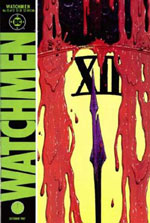 More on Watchmen, including the significance of the Black Freighter pirate sequences, the Institute for Extraspacial Studies, more things Douglas Wolk missed, and why Moore didn’t use the old Charlton Comics characters!
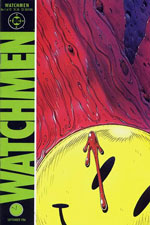 It’s one of the classics of the comics medium: Alan Moore and Dave Gibbons’ “Watchmen.” Tim and Kumar try to unlock the meanings that others have overlooked…
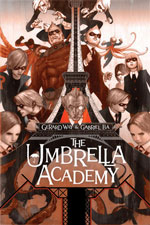 Mulele updates us on the progress of his comics career. Also, Mulele and Tim review the first Umbrella Academy miniseries, Apocalypse Suite.